


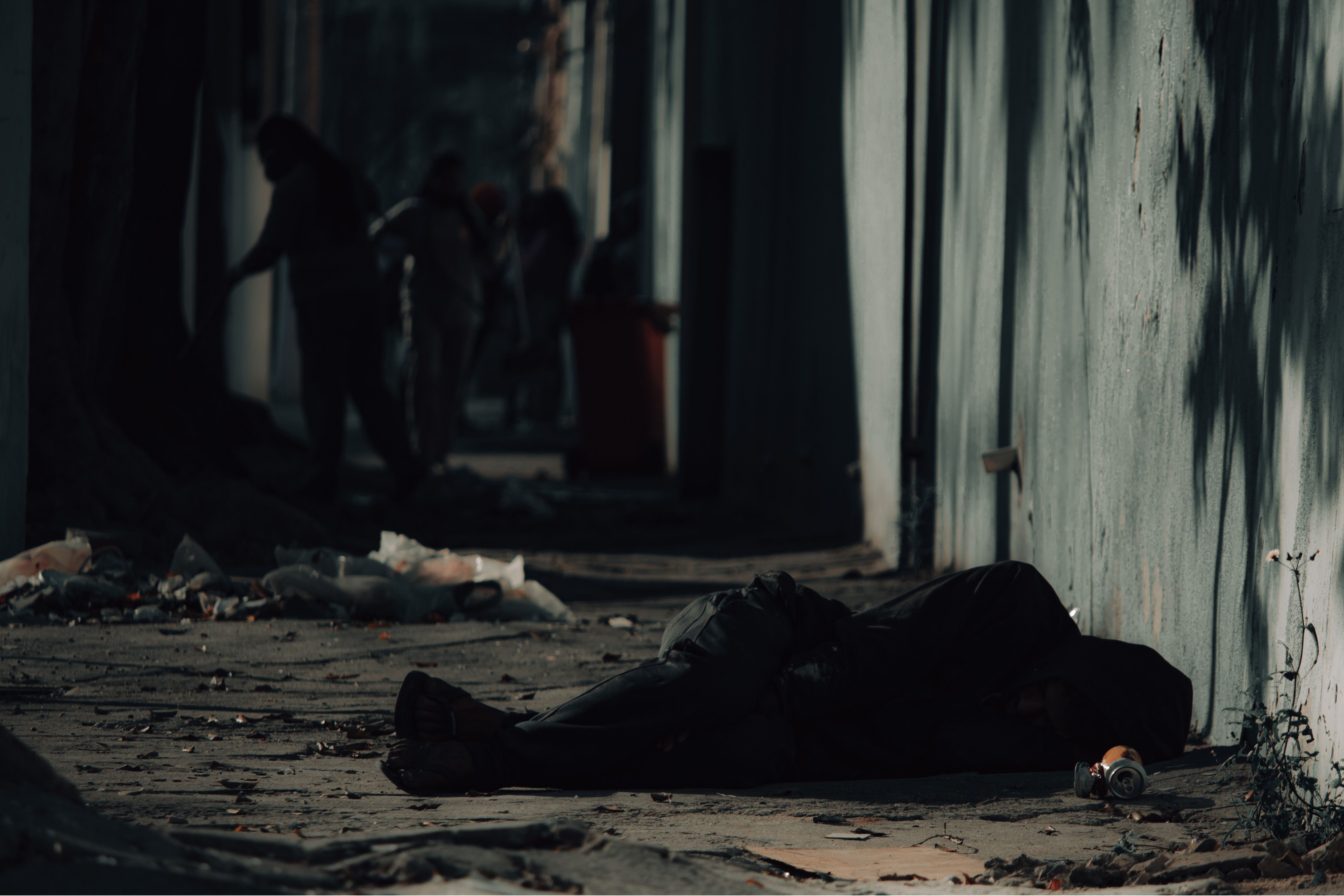
Last week, an 18-year-old who had become homeless after leaving the Family-Based Care Centre happened to get in touch with us. Young people often stay with a friend at first, but suddenly their friend’s patience runs out and they find themselves homeless.
Permanent or temporary accommodation?
There are two foundations that actively help young people find shelter, work and food. One of them is the Foundation for Social Change and Inclusion. We got in touch with them, explained the situation, and they responded immediately by offering to meet with the young person. Niki Zlatev from the Foundation for Social Change and Inclusion was very supportive, both of us and our need for understanding, and of the young person. They immediately found mutual acquaintances, and at the end of the meeting the young man left with a sweatshirt given to him by Niki. What is important to know about the Foundation is that they specialise in permanent accommodation. If a young person needs somewhere to stay for a week or two, they are not the right place. And if the young person is due to finish school and that’s outside Sofia, then obviously permanent accommodation in Sofia isn’t the ideal option. However little happens at school, having ‘completed secondary education’ is still a strict requirement for many job roles.
Temporary accommodation
The Concordia Foundation offers a range of social services, one of which is finding accommodation for vulnerable young people. We were referred to them by the FSPV, who rang and arranged for our young person to be met by them. Although it was 6 pm on a Friday, Concordia met with the young man and within an hour he knew where he would be sleeping that night and what the rules were for staying there. He will even be provided with clothes and other essential items. He moved in that very evening and said that the other two lads in the room had treated him very well.
What are the risks?
The biggest risk is that the young man might drop out of school and fail to complete his secondary education. Especially as, at 18, he can already find a job – often without a contract and with late payment in cash – and it’s hard to convince him that without a 12th-grade qualification, no one will hire him. Now that he’s already been hired.
It’s also hard to convince yourself that it’s worth continuing at school, where there seems to be an unspoken agreement that they won’t expel you even if you’re absent for a month. Because everyone benefits – he gets a secondary education, and they get funding for one more pupil. But there’s hardly any education to speak of.
It’s also hard to imagine how a young person will manage to go to school and work at the same time, and somehow manage to support themselves on the money they earn. Just studying is no longer an option, because after the age of 18 there is no state pension, and once he leaves the Family-Type Placement Centre, he has nowhere to live.
Another significant risk is the environment. It’s an unpopular topic, but where there are vulnerable young people, there are likely to be drugs, crime and all sorts of other dangers. Being cast out by society is a perfect breeding ground for such behaviour.
What helps?
Having a supportive adult. Someone you can message using the free Wi-Fi at a café. Someone who’ll give you something to eat after days of going hungry. Someone who’ll put you in touch with charities you don’t know about and guide you through Sofia to find them. This is exactly what the Give Time Foundation has been doing for 15 years now. Thanks to their mentoring programmes, many young people have someone to turn to when they find themselves in a difficult situation.
This isn’t a success story about Odd Minds Foundation. It’s a story about the ecosystem of non-governmental organisations in Bulgaria that support one another to help young people in need. Each of the organisations mentioned in this article told us: “Thank you for helping him!” How does the saying go? It takes a whole village to raise a child.